The modern kids backpack has become an essential part of school life, blending convenience, style, and durability. However, backpacks as we know them today were not always the go-to choice for students. Before the rise of lightweight, ergonomic school bags, children had to rely on simpler, less structured methods to carry their books, supplies, and personal items. At GoldenSun, we celebrate the evolution of kids backpacks while providing a vibrant collection designed to inspire and support young learners in every stage of school life, combining fun designs with practical features.
Early School Carriers: Hands, Book Straps, and Satchels
Before backpacks became mainstream, children often carried books and notebooks in their hands. This might seem inconvenient today, but at the time, school loads were generally lighter, and students had fewer textbooks. Simple carrying methods like this were sufficient, although they offered no protection from weather or accidental drops.
By the late 19th and early 20th centuries, leather or cloth book straps were introduced. These straps allowed students to bundle textbooks together for easier transport. The straps could be slung over one shoulder or carried in the hand, but they had obvious limitations. For example, heavier loads could strain young shoulders, and the lack of compartments made organization difficult.
Satchels then became a more structured solution. Often made of leather, these briefcase-style school bags featured a flap closure and sometimes a single shoulder strap. They were durable, practical, and offered some protection for books and supplies. Satchels could hold multiple items in a relatively compact format, but they were still rigid, heavy, and not ergonomically optimized for children. Despite these limitations, satchels remained common through the mid-20th century and were considered a status symbol in some schools, indicating care and durability in a child’s school materials.
Outdoor Packs Enter Classrooms
The evolution from satchels to backpacks was influenced by outdoor and hiking culture. In the 1930s and 1940s, rucksacks designed for hikers began to appear. These early zippered packs introduced compartments and flexible carrying options, though they were not yet adopted widely in schools. Rucksacks were praised for their sturdiness and practicality, but children’s exposure to outdoor hiking equipment was limited, and school administrators were slow to embrace such nontraditional designs.
By the 1960s and 1970s, lightweight nylon daypacks, pioneered by brands like JanSport, started gaining popularity among university students. These packs featured a simple two-strap design, a lightweight construction, and ample room for books and notebooks. Students appreciated their convenience, and the trend eventually moved down to younger grades during the 1980s. The backpacks’ portability and ease of use made them preferable to satchels, and children quickly adapted to this new form of carrying school items.
The growing influence of outdoor recreation on daily life also encouraged parents and schools to consider comfort and practicality. Backpacks became not just a functional item but a tool to encourage independence in children. Today, this legacy continues in every kids backpack, blending ergonomic design with imaginative patterns to create an accessory that is both practical and inspiring.
Regional Variations: Europe’s Satchels and the German “Schulranzen”
While North America was quick to adopt backpacks, European countries held onto traditional school bag designs longer. In Germany, for example, the structured “Schulranzen” remained highly popular. These bags originated from the military “tornister” and featured a rigid frame, durable leather or synthetic materials, and a design meant to distribute weight evenly. The Schulranzen was celebrated for its posture support and longevity, making it a preferred choice for children attending elementary schools.
Other parts of Europe also maintained satchel traditions. French and British schools often used leather bags with flap closures and shoulder straps, which offered sturdiness but limited flexibility. These regional preferences illustrate how cultural and historical factors influenced the adoption of backpacks. Even as backpacks gained popularity elsewhere, European children often continued to use satchels due to tradition, durability, and a strong sense of school uniformity.
Why the Backpack Finally Won
The transition to backpacks was driven by several key factors. Comfort was a major consideration: the two-strap design allowed weight to be distributed across both shoulders, reducing the strain caused by older book straps or single-strap satchels. Capacity and durability were also essential; modern backpacks provided room for multiple books, stationery, lunch boxes, and even extracurricular items while remaining lightweight. Nylon and polyester fabrics resisted wear and tear, making backpacks a practical investment for families.
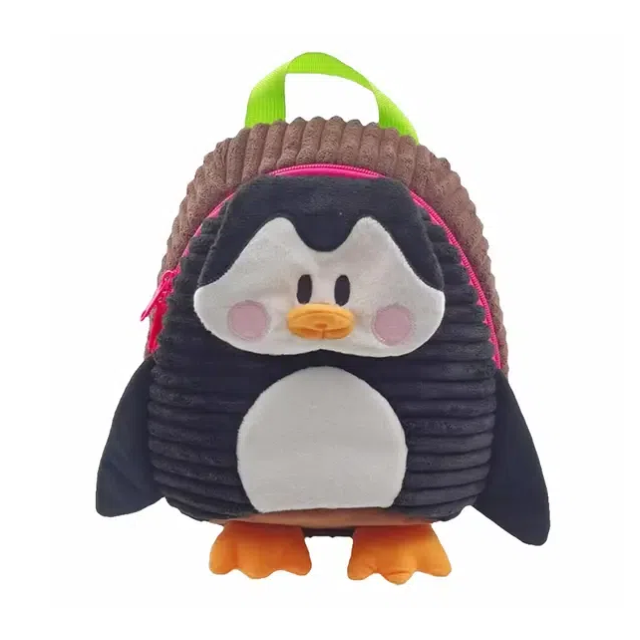
GoldenSun’s kids backpacks reflect this evolution. Each design prioritizes comfort with padded straps, ergonomic shapes, and reinforced bases while offering playful patterns that appeal to children. By combining function with fun, our backpacks help children stay organized while making school a more enjoyable experience.
The Rise of Tech Compartments in Modern Kids Backpacks
As digital devices became integral to education, backpacks evolved further. Modern kids backpacks often include padded laptop or tablet compartments, cable management options, and reinforced protection for electronics. These features help students safely transport devices without compromising space for books or personal items. Additional compartments for water bottles, stationery, and snacks improve organization, ensuring children can quickly find what they need throughout the school day.
GoldenSun’s collection takes this a step further by integrating imaginative designs with practical innovation. Whether a child loves animals, space themes, or adventurous motifs, our backpacks provide a safe, organized, and comfortable carrying solution. They are designed to grow with the child, adapting to different needs from elementary to middle school and beyond.
Conclusion
Before the modern kids backpack, children relied on simple hand-carry methods, book straps, and satchels to transport school materials. These early solutions were functional but often uncomfortable and limited in storage capacity. The transition to backpacks was driven by a need for comfort, organization, and durability. Today, kids backpacks combine ergonomic design, fun patterns, and practical compartments, making them essential for everyday school life.
At GoldenSun, we continue to honor this history while offering a diverse range of kids backpacks designed for both play and school. Each backpack reflects decades of innovation, focusing on durability, comfort, and imaginative design to inspire children. Parents can feel confident choosing our products to provide safety, organization, and fun for their children. Explore our collection today and find the perfect backpack to accompany your child on every educational adventure. Contact us to learn more about our kids backpacks and discover the ideal combination of style and practicality for your child’s needs.