Soft toys have transformed dramatically in recent years. We are seeing a distinct shift from static, floppy stuffed animals to sophisticated articulated designs. These modern creations bend, hold dynamic poses, and interact actively across their environments.
Buyers now face a unique challenge. You must determine if the added cost and mechanical complexity of poseable plush designs align properly. Your specific use case—whether display, interactive play, or collector photography—dictates the correct structural choice. Picking the wrong internal mechanics often leads to rapid wear or safety hazards.
In this guide, we will examine the internal mechanics driving this trend. We cover durability trade-offs, critical sourcing criteria, and practical maintenance realities for articulated plush items. You will learn exactly how to evaluate skeletal frames and select the optimal design for your needs.
Key Takeaways
Mechanical variation dictates lifespan: Ball-and-socket armatures offer reliable hold for display, while wire frames degrade faster under heavy play.
Use-case alignment is critical: Poseable designs elevate decor and collectible photography but require specific safety and durability standards for active play.
Customization introduces compliance variables: Sourcing a custom plush toy with movable joints requires strict attention to internal housing tolerances and international safety certifications.
Maintenance limitations: Articulated plush toys generally cannot be machine-washed without risking joint corrosion or armature shifting.
The Mechanics Behind a Movable Joint Plush Toy
To understand how an articulated toy performs, you must look beneath the fabric. The internal skeleton dictates flexibility, weight, and lifespan. Manufacturers rely on a few specific armature systems to achieve realistic movement.
Here are the primary internal armature types used today:
Wire Frames: These serve as the most cost-effective option for basic posing. Manufacturers wrap thick copper or aluminum wire inside foam tubing. They remain highly flexible. However, they are prone to metal fatigue. Repeated bending in the exact same spot eventually causes snapping.
Plastic Ball-and-Socket Skeletons: This system stands as the industry standard for high-end collectibles. Engineered from durable POM (polyoxymethylene) plastic, these interconnected pieces offer locked positioning. They provide higher durability and reliable friction. This means limbs stay exactly where you position them.
3D-Printed Articulations: These represent emerging hybrid models in the toy industry. Designers blend rigid 3D-printed modular joints under soft plush exteriors. This allows for incredibly precise posing tailored to specific character anatomy.
Fabric and housing considerations play an equally vital role. A high-quality internal frame means nothing if it punctures the exterior. Manufacturers must prevent internal skeletons from piercing the fabric or shifting off-center during movement. They achieve this by wrapping the armature in dense batting or EVA foam. Additionally, factory designers use internal fabric channels and reinforced double-stitching at high-stress areas like elbows and knees. This ensures the skeleton stays anchored within the center of the plush cavity.
Evaluating Poseable Designs by Buyer Category
Different buyers require entirely different mechanical setups. A movable joint plush toy designed for a collector’s shelf will fail quickly in a toddler's playroom. Let us break down the value propositions and risks across three primary buyer categories.
For Home Decor & Display
The core value proposition here is spatial adaptability. Articulated plush toys adapt beautifully to challenging shelf space. They can sit on edges, hang from fixtures, or lean naturally against books. You do not need external metal or acrylic stands to keep them upright.
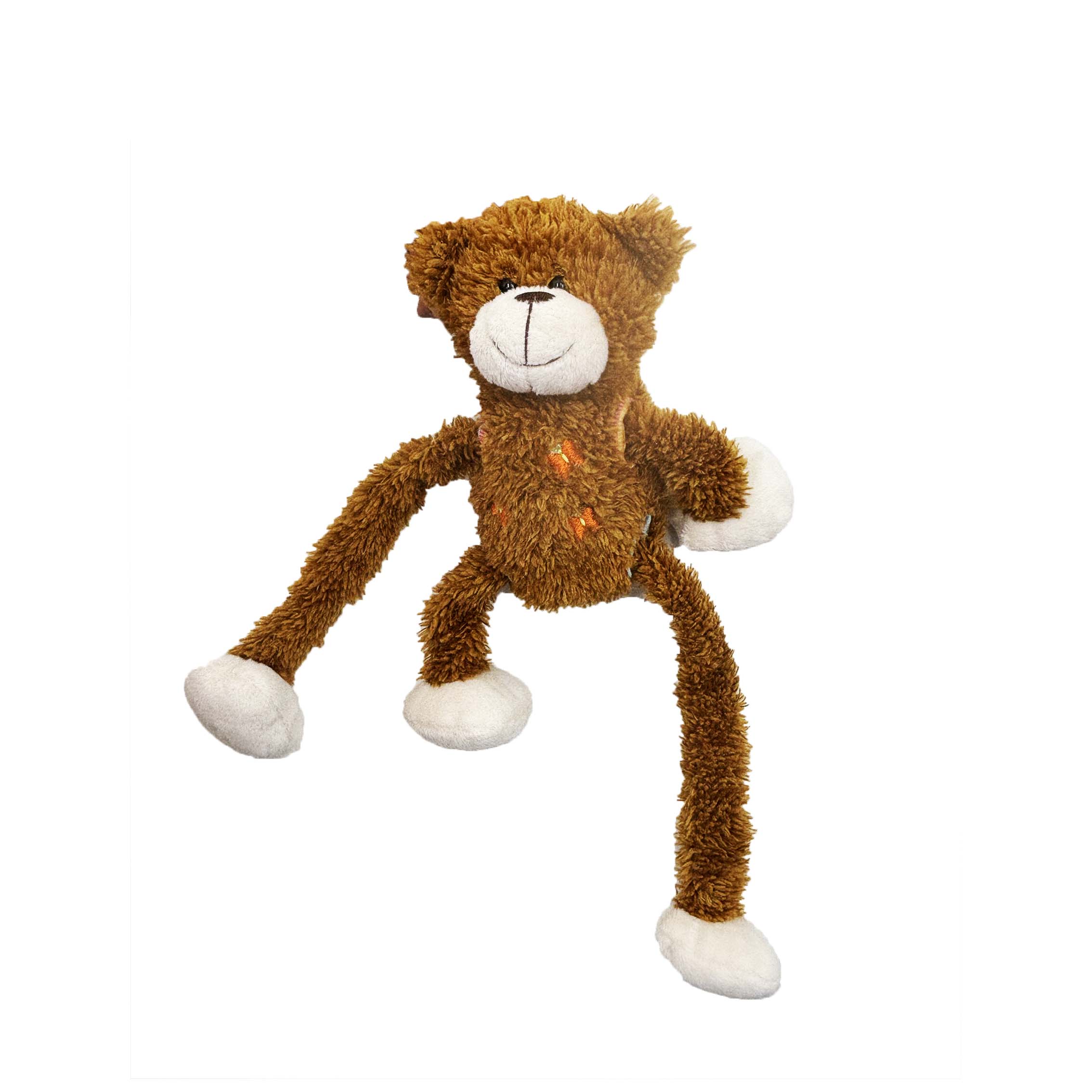
Consider a well-designed monkey plush toy for your space. Instead of sitting statically in a corner, it can be hung dynamically from bookshelves or draped around desk lamps. This integrates the item actively into your room decor. For these display-heavy use cases, thick wire frames or basic ball-and-socket joints offer more than enough holding power.
For Interactive Play
Poseable toys offer enhanced motor skill engagement and role-play versatility for older children. Kids can manipulate characters into running, jumping, or sitting poses. This deepens imaginative play scenarios significantly.
However, the risk factor remains high regarding wear-and-tear. Repeated bending accelerates joint fatigue. If the toy is meant to stand independently, you must assess its weight-bearing capacity. Weak wire frames will eventually buckle under the weight of heavily stuffed plush heads. For interactive play, safety-tested plastic ball-and-socket joints wrapped in thick safety foam provide the most reliable solution.
For Collectors & Toy Photography
Articulated plush items cross the boundary between traditional stuffed animals and action figures. The value proposition is entirely visual. Collectors demand dynamic, scene-specific posing capabilities.
This articulation is critical for "toy-stagram" photography and intricate dioramas. Collectors need joints capable of mimicking human or animal locomotion accurately. High-end plastic armatures or hybrid 3D-printed joints serve this demographic best. They offer the stiff resistance needed to hold unbalanced action poses during long photo shoots.
Static vs. Articulated Plush: A Purchasing Matrix
Choosing between a traditional floppy design and a poseable model involves several trade-offs. You must balance budget against functionality. Below is a comparison chart highlighting the core differences.
Feature Category | Static Plush Toys | Articulated Plush Toys |
Cost Implications | Highly affordable. Simple cut-and-sew assembly processes keep manufacturing costs minimal. | Carry a 30-50% price premium. Mechanical assembly and internal armature sourcing increase production expenses. |
Longevity & Durability | Lasts longer under heavy compression. Ideal for rough handling and heavy impacts. | Maintains structural shape better over time. However, joints may weaken under intense, repetitive mechanical stress. |
Sensory Differences | Extremely soft and yielding. Perfect as traditional "cuddle" items for sleep and comfort. | Feature a noticeably stiffer core. The rigid internal skeleton makes them less suitable for sleeping. |
Understanding this matrix helps align your purchasing decisions. If the primary goal is comfort, static wins. If the goal is display longevity and structural integrity, articulated designs justify their higher price point.
Sourcing Considerations for a Custom Plush Toy with Joints
Developing a new poseable figure requires precise engineering. If you are sourcing a custom plush toy featuring internal articulation, several distinct manufacturing hurdles apply.
Prototyping realities often surprise new buyers. Establishing the correct plush-to-skeleton ratio represents the most common failure point in custom manufacturing. If workers pack too much polyfill around the skeleton, the fabric tension prevents the joints from bending. If they use too little stuffing, the hard plastic armature feels prominent and unappealing. Achieving the perfect balance requires multiple iterative samples.
Safety and compliance demand strict attention, especially in B2B sourcing. You are no longer just testing fabric flammability. You must ensure internal plastics and metals pass rigorous ASTM F963 (US) or EN71 (EU) drop and torque tests. Inspectors will actively try to twist and snap the internal limbs. You must mitigate choking hazards completely. If internal joints break during testing, sharp plastic shards cannot pierce the exterior fabric.
Minimum Order Quantities (MOQs) also shift. Expect notably higher MOQs for custom articulated skeletons compared to standard stuffing. Off-the-shelf armatures might allow lower volumes. However, if your character requires a custom bone structure, factories must create new steel injection molds for the plastic joints. This upfront tooling cost forces higher initial production runs.
Known Limitations and Maintenance Realities
Poseable toys require distinct care routines. Treating them like traditional stuffed animals often destroys their internal mechanics. You must understand their physical limitations.
Washing restrictions serve as the most critical limitation. Machine washing is typically prohibited for any articulated item. Submerging wire frames causes rapid rust formation inside the toy. Washing ball-and-socket skeletons traps water in the plastic joints, leading to internal mold. Furthermore, heavy spin cycles degrade the protective foam housing around the skeleton. Always emphasize spot-cleaning only using a damp cloth and mild detergent.
Fabric pinching and wear presents another long-term issue. Repeated posing stresses specific textile zones. Fabric stretches or thins around high-friction areas like shoulders and hips. Over time, cheap minky or spandex blends may develop micro-tears where the internal plastic hinge rubs against the textile backing. Selecting high-density fabrics during the design phase mitigates this risk.
Finally, expect inevitable joint loosening. You must acknowledge that ball-and-socket friction decreases over time with excessive manipulation. Micro-abrasions wear down the plastic nodules. A toy holding a perfect one-legged stand today might struggle to maintain that same pose after three years of daily manipulation. Treat poseable plush items gently to extend their functional lifespan.
Conclusion
Navigating the world of poseable soft toys requires balancing structural mechanics against your intended use case. The shift toward articulated designs offers incredible opportunities for creative display and interactive engagement. However, the internal skeleton defines the ultimate success of the product.
To successfully purchase or manufacture these items, keep these actionable next steps in mind:
Assess your true usage intent before evaluating price.
Choose wire frames strictly for lightweight, budget-friendly decor needs where poses change infrequently.
Invest in plastic ball-and-socket armatures for high-end collectibles, toy photography, or heavy display items.
Request safety certification documentation (like ASTM F963 or EN71) specifically detailing torque and drop test results for the internal frame.
Implement strict spot-cleaning maintenance routines to prevent internal rust and foam degradation.
Final recommendation: Prioritize verifiable material specs over novelty when making a final purchasing or manufacturing decision. A beautifully designed exterior means very little if the internal skeleton snaps after a week of use.
FAQ
Q: How do you fix a broken joint inside a movable plush toy?
A: Fixing a broken internal joint requires careful seam ripping along the affected limb. You must remove the surrounding stuffing, extract the damaged skeleton segment, and snap in a replacement piece. Afterward, you restuff the cavity and securely resew the seam using a ladder stitch. Due to the precision required, it is rarely a DIY fix for beginners.
Q: Are movable joint plush toys safe for toddlers?
A: Generally, no. Traditional embroidered, soft plush items suit infants best. Articulated plush toys carry rigid internal skeletons posing potential pinch or breakage risks. Because internal parts could theoretically break and become choking hazards, poseable plush is generally rated for ages 3+ or 15+, depending strictly on joint complexity and regional safety testing.
Q: Can I machine wash an articulated plush?
A: No. You must avoid machine washing these items. Submerging them causes water to trap inside plastic joints, leading to mold. If the toy contains wire frames, machine washing induces internal rust. The agitation also shifts the protective foam housing. Reinforce the spot-clean only rule to prevent severe armature damage.