Parents today scrutinize the ergonomic and safety features of their children's gear closer than ever before. They want assurance their little ones carry bags designed specifically for growing bodies. For brands and wholesalers, partnering with a reliable preschool backpack OEM requires translating these strict B2C consumer demands into precise manufacturing specifications. You cannot simply shrink an adult bag and call it a toddler product.
A successful OEM partnership depends heavily on balancing child-safe material compliance, medically sound ergonomic designs, and scalable production costs. You must achieve all this without sacrificing long-term durability. If a bag fails on the playground or strains a child’s back, parents will quickly lose trust in your brand.
This guide outlines the exact sizing, fabric, safety, and structural requirements you need. You will learn what details to include in your tech packs to ensure flawless production runs. We will also show you how to use these benchmarks to evaluate potential manufacturing partners confidently.
Key Takeaways
Strict Sizing Limits: Preschool backpacks must be engineered for 6–9L capacities and heights of 10–14 inches to prevent posture damage.
Compliance-First Fabrics: Material selection must prioritize CPSC/REACH compliance, utilizing lightweight, BPA-free, and easily washable fabrics (e.g., Ripstop Nylon or high-denier Polyester).
Medical-Grade Ergonomics: OEMs must be capable of integrating wide, padded straps and structural back support to mitigate risks like nerve compression or apophysitis.
Privacy & Visibility: Standardizing 200-foot visibility reflective elements and hidden ID tags is crucial for modern safety standards.
Vendor Vetting: Shortlist manufacturers based on their QA processes, specifically looking for reinforced bar-tack stitching at high-stress points and verifiable material certifications.
Sizing and Capacity Restrictions for the Preschool Market
Toddlers experience rapid physical development. Their growing spines are highly vulnerable to uneven weight distribution. You must design bags around strict anthropometric baselines rather than visual aesthetics alone.
The Anthropometric Baseline
A toddler's body cannot handle standard sizing. Backpack height must never exceed the child's torso length. For children aged two to five, torso length typically ranges from 10 to 14 inches. You measure this from the base of the neck to the top of the hip bone. If a bag sits lower than the natural waistline, it pulls the child backward. This forces them to lean forward aggressively to compensate. You should instruct your factory to cap overall bag height strictly at 14 inches.
Volume Specifications
Instruct your OEM to cap internal volume at 6 to 9 liters. A common mistake brands make is offering too much space. Extra room inevitably encourages parents to overpack. A 6 to 9-liter capacity provides exactly enough room for daily essentials.
To visualize this volume, consider standard preschool contents:
One standard insulated lunchbox.
One 12-ounce leak-proof water bottle.
One set of rolled-up spare clothes.
A small communication folder or a few art supplies.
Limiting volume directly prevents heavy textbooks or unnecessary toys from slipping into the daily load.
Empty Weight Control
Pediatric guidelines dictate children should carry no more than 10–15% of their body weight. Given an average preschooler weighs around 30 to 40 pounds, their maximum safe carrying load is merely 3 to 6 pounds. Your OEM must source extremely lightweight core materials. If the empty bag weighs two pounds, it consumes half the strict weight allowance before parents even pack a water bottle. Demand lightweight base fabrics so the bag itself remains nearly weightless.
Fabric Selection, Durability, and Compliance Standards
You cannot compromise on the materials used for toddler products. The fabric must withstand daily dragging across playground concrete while remaining soft enough to prevent skin abrasions.
Material Matrix
Evaluate OEMs on their ability to source tear-resistant but soft materials. You need to balance manufacturing costs against functional benefits. Below is a simple matrix comparing common preschool backpack materials:
Material Type | Durability & Tear Resistance | Weight Profile | Ideal Application |
Ripstop Nylon | High (resists tearing via grid weave) | Ultra-lightweight | Premium lightweight bags, activewear designs. |
Standard Polyester (600D) | Moderate to High | Lightweight | Everyday use, budget-friendly bulk runs. highly printable. |
Ballistic Nylon | Extreme | Heavy | Not recommended for toddlers due to high empty weight. |
Chemical Compliance (Non-Negotiable)
Safety transcends physical features. Ensure the factory provides verified third-party testing for all materials. Fabrics, dyes, plastics, and hardware must be 100% BPA-free and phthalate-free. They must also comply strictly with regional safety standards. If you sell in the US, demand CPSC compliance certificates. If you sell in Europe, require REACH testing data. A factory unwilling or unable to provide recent chemical testing reports presents a massive liability. You should disqualify them immediately.
Construction Durability
Children treat their bags like toys. They swing them by the straps and drag them across floors.
Specify reinforced stitching: Ensure the manufacturer uses bar-tacking at critical stress points. Bar-tacking involves densely sewing zig-zag stitches over stress areas like carry handles and shoulder strap attachments. This prevents the straps from tearing out of the seam allowance.
Demand high-quality hardware: Toddlers lack advanced fine motor skills. Tiny zippers frustrate them and easily derail. Specify oversized, easy-pull YKK zippers. They glide smoothly and resist breaking under rough handling. Attach large silicone or fabric zipper pulls to help small fingers grip easily.
Ergonomics and Structural Health Features
Every structural choice impacts a child's posture. Designing a bag with poor weight distribution can lead to lasting medical issues.
Medical Reality in Design
Poorly designed straps often dig deeply into small shoulders. Over time, this pressure causes nerve compression, which leads to numbness or tingling in the child's hands. Furthermore, excessive or poorly balanced loads contribute to apophysitis. This is a painful inflammation of growth cartilage around joints like the shoulders and spine. A high-quality bag actively mitigates these risks.
Strap Specifications
Your tech pack must mandate wide, ergonomically curved, heavily padded shoulder straps. The straps should form a gentle "S" shape to contour around the chest and armpits rather than cutting straight down. The padding must utilize high-density EVA foam. Cheap open-cell foam flattens out after just a few weeks of use, offering zero protection.
Back Panel Engineering
A soft bag without structure causes internal items, like hard lunchboxes or toys, to dig into the spine. Require a breathable, padded mesh back panel. This panel should include a lightweight internal stiffener to maintain the bag's structure. The mesh covering ensures proper airflow, keeping the child comfortable during hot weather.
Avoid Drawstrings
Explicitly prohibit thin drawstring closures in preschool designs. Drawstring backpacks pose severe entanglement and strangulation risks for young children. Additionally, the thin ropes dig directly into shoulder tissue, completely violating pediatric ergonomics. Always opt for structured zippered compartments instead.
Integrating Visibility and Privacy Safety Features
Modern backpacks must protect children from traffic accidents while shielding their personal information from strangers.
High-Visibility Elements
Low-light conditions during early mornings or winter afternoons create hazards near school buses and crosswalks. Require OEMs to stitch reflective tape or piping into the front panel, side pockets, and both shoulder straps. The industry standard requires achieving visibility for drivers from at least 200 feet away. Do not treat reflective strips as optional decorations; they are life-saving utility features.
Parents are highly aware of modern privacy risks. Do not place transparent name windows on the exterior of the bag. Displaying a child's name publicly allows strangers to approach them using their first name, creating a false sense of familiarity. Instead, work with your OEM to design interior ID labels. Alternatively, use concealed back-panel ID windows hidden securely behind the shoulder straps or breathable mesh.
Chest Straps (Sternum Straps)
Narrow toddler shoulders often cause standard backpack straps to slip off continuously. Include a sternum strap in your design. This strap connects the two shoulder straps across the chest, distributing weight evenly and keeping the bag stable during running. However, ensure you mandate a breakaway buckle. Breakaway hardware releases automatically under high pressure, preventing choking if the bag gets caught on playground equipment.
Customization and Specialty Designs (Plush and 3D Elements)
Preschoolers love bags that double as companions. Adding animal shapes or plush features drives immense sales, but introduces distinct manufacturing challenges.
Complexity vs. Scalability
Adding 3D elements, floppy ears, or character designs heavily increases tooling costs and overall production time. You must evaluate if the factory has proven experience with mixed-material assembly. Sewing heavy canvas to soft plush requires specialized machinery and highly skilled operators. Ensure you understand how these complex customizations affect your final unit cost.
Execution Example
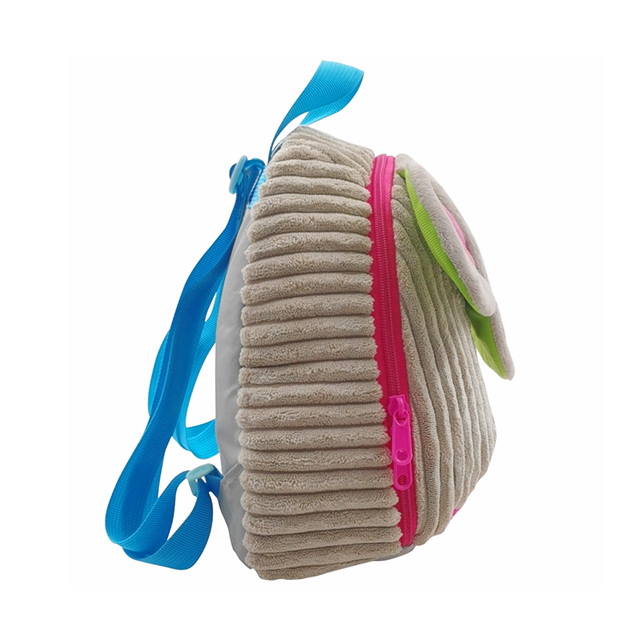
Consider the manufacturing demands if you produce a specialized item like a soft elephant preschool backpack. The OEM must demonstrate deep expertise in securing plush appendages safely. An elephant’s trunk or floppy ears cannot merely be surface-stitched. They must pass rigorous pull-tests. If an appendage rips off easily, it immediately becomes a choking hazard for young children. You should specify double-reinforced seams for any 3D elements in your tech pack.
Color Psychology and Dyes
Preschoolers respond most strongly to bright, primary colors. Vibrant hues help kids easily identify their bags in chaotic kindergarten cubbies. Ensure the factory utilizes high-grade, colorfast dyes. Toddler gear gets incredibly dirty and requires frequent washing. If the dyes bleed during cold-water machine washing, the product will quickly look ruined, leading to immediate customer complaints.
How to Evaluate and Shortlist a Kids Backpack Manufacturer
Finding a factory willing to make a bag is easy. Finding a factory that consistently upholds toddler safety standards requires diligent vetting.
Audit the QA Process
Ask potential manufacturers directly for their internal Quality Assurance checklist. Do they perform dynamic load-bearing tests? They should load the bag with heavy weights and drop it repeatedly by the straps to test seam strength. Do they test zipper life cycles? Ask them how many continuous opening and closing cycles their zippers guarantee before failing. Only partner with a kids backpack manufacturer who eagerly shares their testing protocols.
Sample Prototyping
A reliable OEM should provide a fully functional prototype before you authorize mass production. Never approve production based purely on digital renderings. Once you receive the physical sample, check it against a mannequin or a real child in the target age group. Ensure the bag bottom rests cleanly at the natural waistline and does not sag below it. Inspect every internal seam for frayed edges.
Minimum Order Quantities (MOQs) and Scalability
Always clarify MOQs early in your negotiations. MOQs differ wildly for standard factory silhouettes versus fully custom molds. Transparent OEMs will outline precisely how customizations impact the bottom line. For instance, requesting standard black zippers might keep MOQs low, whereas demanding custom silicone zipper pulls or highly specific Pantone fabric dyes will likely push the required order volume much higher.
Conclusion
Transitioning a preschool backpack concept into a market-ready product requires partnering with a preschool backpack OEM that respects the physiological limits of toddlers and the safety anxieties of parents. You cannot cut corners on hardware or fabric safety without risking your brand's reputation.
The ROI of prioritizing quality is substantial. Investing heavily in bar-tack stitching, compliant lightweight fabrics, and ergonomic padding sharply reduces return rates. More importantly, it builds crucial brand trust with parents who will return to your brand as their children grow into older school grades.
Before moving forward, take these next action steps:
Finalize your tech pack using the strict sizing limits (6-9L, 10-14 inches high) outlined in this guide.
Clearly detail all safety specifications, including 200-foot visibility reflectors and hidden ID tags.
Request detailed chemical compliance certificates from all shortlisted vendors.
Order a physical sample to physically verify seam integrity, zipper smoothness, and material weight before signing any mass production agreement.
FAQ
Q: What is the ideal capacity to specify when ordering preschool backpacks from an OEM?
A: For the 2–5 age range, request a capacity of 6 to 9 liters and a height between 10 and 14 inches. This size perfectly fits a lunchbox, a water bottle, and spare clothes without allowing the bag to hang dangerously below the child’s natural waistline.
Q: How can I ensure the kids backpack manufacturer meets safety standards?
A: Require current, third-party lab testing certificates for CPSC (US) or REACH (EU) compliance. These documents prove all fabrics, plastics, and dyes are completely free of lead, BPA, and phthalates.
Q: What is the standard MOQ for a custom preschool backpack OEM project?
A: MOQs vary by factory but typically range from 500 to 1,000 units per colorway for custom designs. Using factory-standard molds with custom branding can sometimes lower this threshold, while highly specialized Pantone dyes might increase it.
Q: Can an OEM integrate both plush materials and standard backpack structures?
A: Yes, experienced manufacturers can combine materials (like creating a soft elephant preschool backpack with a structured, ergonomic back panel). However, you must ensure the plush elements pass rigorous seam-strength and pull tests to prevent them from becoming choking hazards.