Introduction
Did you know that sewing can do more for kids than just spark creativity? It's a skill that helps children grow in many areas.
In this article, we’ll explore how sewing benefits kids beyond the basics of crafting. From fine motor skills to building confidence, a Kids Sewing Kit can be a powerful tool in their development. You'll discover why sewing is so valuable for children and how it helps them thrive.
Enhancing Fine Motor Skills and Hand-Eye Coordination
How does sewing improve fine motor skills?
Sewing helps children develop fine motor skills through tasks that require precise hand movements. Activities like threading a needle, cutting fabric, and stitching along a straight line engage small muscles in the hands and fingers. These movements enhance muscle control, making it easier for children to perform other tasks that require dexterity, such as writing, drawing, or tying shoelaces.
Additionally, sewing fosters muscle memory through repetition, enabling children to perform these fine motor tasks with greater ease over time.
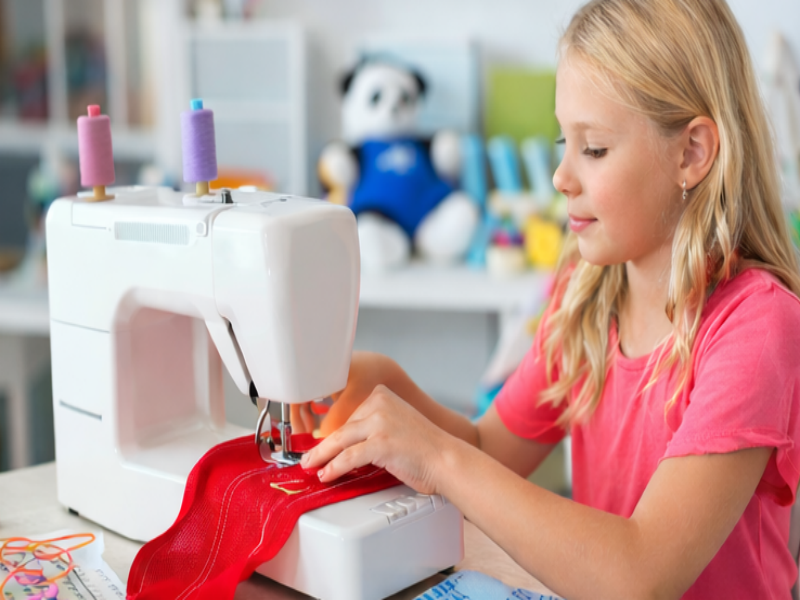
The importance of fine motor skills in other aspects of childhood development
Fine motor skills are essential for a wide range of activities that children engage in daily. For example, improved hand-eye coordination is necessary for tasks like handwriting and cutting with scissors. As children develop these skills through sewing, they become more adept at tasks requiring precision and concentration.
Skill Developed | Related Activity | Impact on Development |
Hand-Eye Coordination | Writing, Drawing | Improves concentration and focus |
Dexterity | Using utensils, buttoning shirts | Enhances control in everyday tasks |
Fine Motor Control | Typing, using scissors | Strengthens finger and hand muscles |
Real-Life Application of Math Skills Through Sewing
How does sewing help children learn math?
Sewing is an engaging and hands-on way for children to practice and apply math skills. Throughout the sewing process, children must measure fabric, calculate seam allowances, and adjust patterns, all of which involve basic mathematical concepts. By using tools like rulers and measuring tapes, children reinforce their understanding of measurements, fractions, and proportions.
Math Concept | Application in Sewing | Real-World Example |
Measurements | Using rulers or measuring tapes to measure fabric | Cutting fabric to fit patterns |
Fractions | Calculating seam allowances (e.g., 1/4 inch, 1/2 inch) | Adding or subtracting fractions in projects |
Geometry | Understanding shapes, angles, and symmetry in patterns | Designing a balanced garment or quilt |
By incorporating these concepts into real-world tasks, sewing helps children see how math can be applied outside the classroom, making abstract concepts more tangible and relevant.
Example: Using a ruler, measuring fabric, and cutting patterns to fit
A simple example of math in sewing is measuring fabric for a project. For instance, when making a skirt, a child needs to measure the waist and the length of fabric required. They must also account for seam allowances, which could involve calculating fractions like 1/4 inch. Once they have the correct measurements, they cut the fabric according to the pattern, ensuring all pieces fit together properly. This process helps children practice addition, subtraction, and fractions in a practical context.
● Steps involved:
○ Measure the fabric using a ruler or measuring tape.
○ Add seam allowances to the measurements.
○ Cut fabric pieces based on the pattern's specifications.
○ Ensure all pieces align correctly before sewing.
Through these steps, children not only practice measuring but also develop a deeper understanding of spatial relationships, which is key in many areas of math.
The connection between sewing and practical math application
Sewing helps children connect mathematical concepts to everyday life. For example, understanding how to fit fabric pieces together requires knowledge of geometry and symmetry. When children sew a pattern together, they need to ensure that all pieces are aligned, requiring them to consider proportions and measurements.
By working with fabric, children learn to visualize how shapes fit together, reinforcing their understanding of geometric principles like area, perimeter, and symmetry. This practical application of math in sewing helps children understand its real-world value and strengthens their problem-solving abilities.
Building Patience, Focus, and Problem-Solving Skills
Why is sewing a great way to teach patience and focus?
Sewing is an ideal activity for teaching patience because it requires children to work at a steady pace, following a series of steps from start to finish. Unlike fast-paced tasks, sewing is a methodical process that demands focus on each detail. Children must carefully measure, cut, and stitch, paying attention to even the smallest tasks like aligning fabric pieces or adjusting thread tension.
This slow, deliberate nature of sewing helps children develop patience. As they complete each stage of a project, they learn that good results come with time and careful attention. Sewing also fosters focus because the process requires continuous engagement with each step. Children can’t rush through the work, and they learn to concentrate on the task at hand, which is an essential skill for academic success and other areas of life.
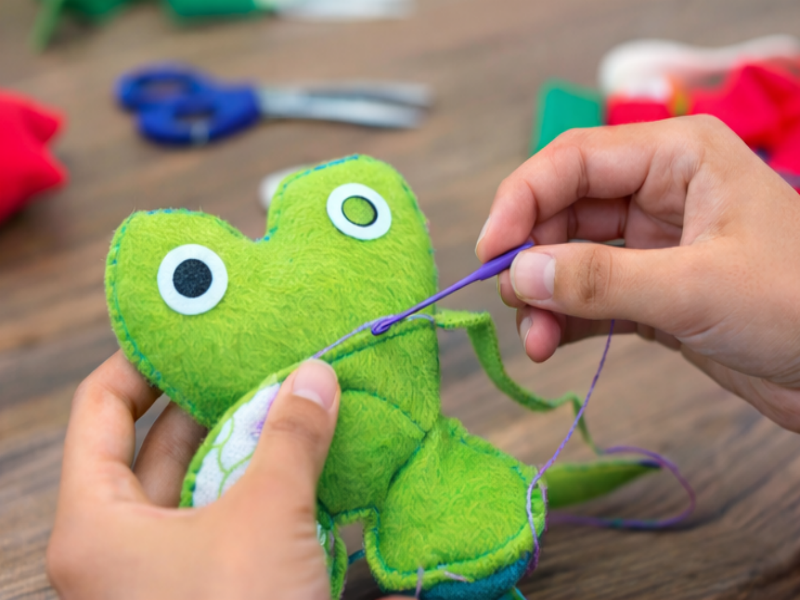
How sewing teaches problem-solving when things go wrong
Sewing offers countless opportunities for children to develop problem-solving skills. During a sewing project, mistakes are inevitable—whether it’s a stitch that doesn’t align properly, a fabric piece that’s too small, or thread that tangles in the machine. These moments of error teach children to think critically and troubleshoot.
Problem Encountered | Solution | Skills Learned |
Crooked seams | Re-threading the machine, adjusting fabric | Problem-solving, precision |
Fabric pieces misaligned | Trimming, re-measuring, adjusting measurements | Critical thinking, patience |
Machine malfunctions | Fixing tension, re-aligning threads | Troubleshooting, persistence |
These challenges encourage children to approach problems logically and find solutions independently. As they resolve issues during the sewing process, they not only gain practical skills but also build resilience, learning that mistakes are a natural part of the learning process. This mindset is invaluable in everyday life, teaching them that persistence and critical thinking lead to success.
Empowering Kids with Confidence Through Finished Projects
How does sewing build confidence in kids?
Sewing provides children with a unique sense of accomplishment. When a child completes a project, such as creating a simple bookmark or a piece of clothing, they experience a tangible result from their effort. This hands-on success builds confidence by showing them that they can create something from scratch, reinforcing the belief that their skills and dedication lead to positive outcomes.
Completing a project fosters a “can-do” attitude in children. They learn that with patience and persistence, they can overcome challenges and finish what they start. This confidence often extends beyond sewing and translates into other areas of their lives, from schoolwork to interpersonal relationships, encouraging them to take on new challenges with a positive mindset.
Impact of successful projects on self-esteem and encouragement to try new challenges
The satisfaction of completing a sewing project directly impacts a child’s self-esteem. As they complete projects, they gain pride in their ability to achieve something independently, which boosts their self-worth. This feeling of achievement encourages them to tackle more complex projects and try new things, as they have already seen the value of their efforts.
This process of creating something from scratch also teaches resilience. When faced with obstacles—whether it's a mistake in the stitching or a miscalculation in measurements—children learn to persist and correct their errors. The confidence they gain from problem-solving and finishing projects motivates them to approach future challenges with the same level of determination.
A Lifelong Skill with Practical Benefits
What real-world benefits does sewing offer kids as they grow?
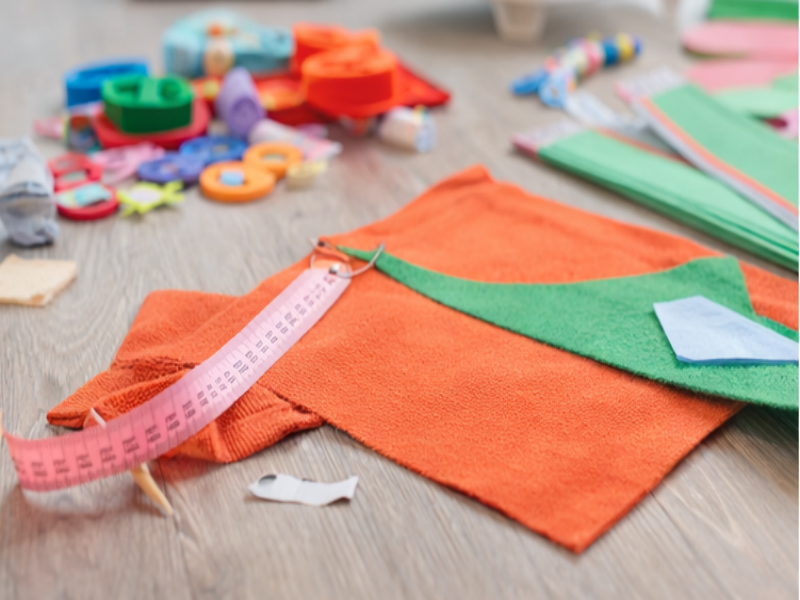
Sewing is more than just a creative hobby—it provides valuable life skills that children carry with them into adulthood. As children learn to sew, they develop practical skills such as mending clothes, altering garments, and creating their own accessories. These skills encourage self-sufficiency, allowing children to care for their belongings and create useful items without relying on others.
Key practical benefits of sewing:
Sewing Skill | Benefit | Impact on Everyday Life |
Mending clothes | Fixing tears, replacing buttons, patching holes | Saves money, reduces waste, promotes sustainability |
Altering garments | Adjusting fit, length, and style | Personalizes wardrobe, enhances creativity |
Creating accessories | Designing and making items | Encourages self-sufficiency, boosts creativity |
Sewing as a skill for self-sufficiency, from childhood to adulthood
As children become more proficient in sewing, they gain the ability to take care of their own clothing and even design their own wardrobe. This self-sufficiency is particularly valuable as they grow older, enabling them to maintain and modify their clothes rather than always relying on commercial alternatives. Additionally, these skills provide a sense of pride and accomplishment, knowing they have the tools to handle everyday tasks independently.
The skills learned through sewing are also transferable to other areas of life, such as crafting, home décor, or even starting a small business. Sewing teaches children that they can be resourceful and creative, encouraging them to pursue more practical and artistic projects throughout their lives.
Conclusion
Sewing offers numerous benefits for kids, from promoting creativity to developing fine motor skills. It helps build confidence, encourages patience, and improves problem-solving abilities. By introducing children to sewing, they learn valuable life skills. Starting with a Kids Sewing Kit from Taizhou Goldensun Arts&Crafts Co., Ltd. can provide them with a solid foundation. This kit is designed to foster creativity and skill development in a fun, hands-on way.
FAQ
Q: How can a Kids Sewing Kit benefit a child's development?
A: A Kids Sewing Kit helps children develop fine motor skills, hand-eye coordination, and problem-solving abilities. By engaging in sewing projects, kids practice patience, attention to detail, and perseverance.
Q: What age is suitable for starting with a Kids Sewing Kit?
A: Children as young as 5 years old can start with a Kids Sewing Kit. Simple projects like hand-sewing bookmarks or felt animals are ideal for beginners.
Q: How does a Kids Sewing Kit improve math skills in children?
A: A Kids Sewing Kit encourages children to practice measurements, fractions, and geometry, as they measure fabric and adjust patterns, making math more practical and engaging.